
Learn to Throw an AeroJav
Start with a target, build sound throwing mechanics, and improve with practice. These illustrated SPEARWERX guides make the fundamentals easy for young athletes, families, and coaches to follow.
PHANTOM 250g — How to Throw
A visual introduction to the seven fundamentals: pick a target, keep your eyes up, hold the AeroJav straight, keep the elbow high, throw forward, control nose angle, and follow through toward the target.
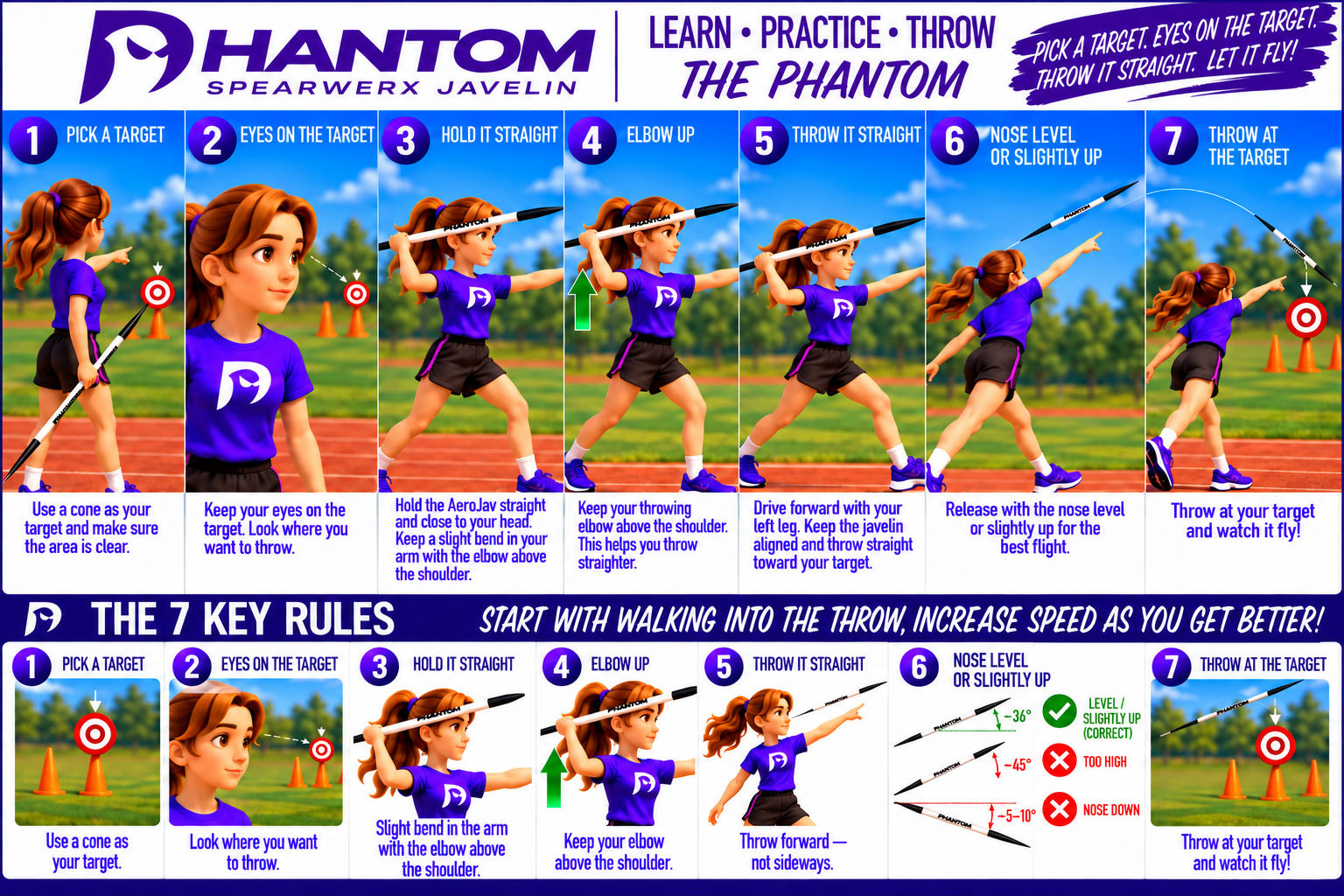
Click the storyboard to read it at full resolution.
GHOST 450g — How to Throw
Seven clear steps for consistent throws, followed by illustrated corrections for throws that veer right or left, stall, or dive early.
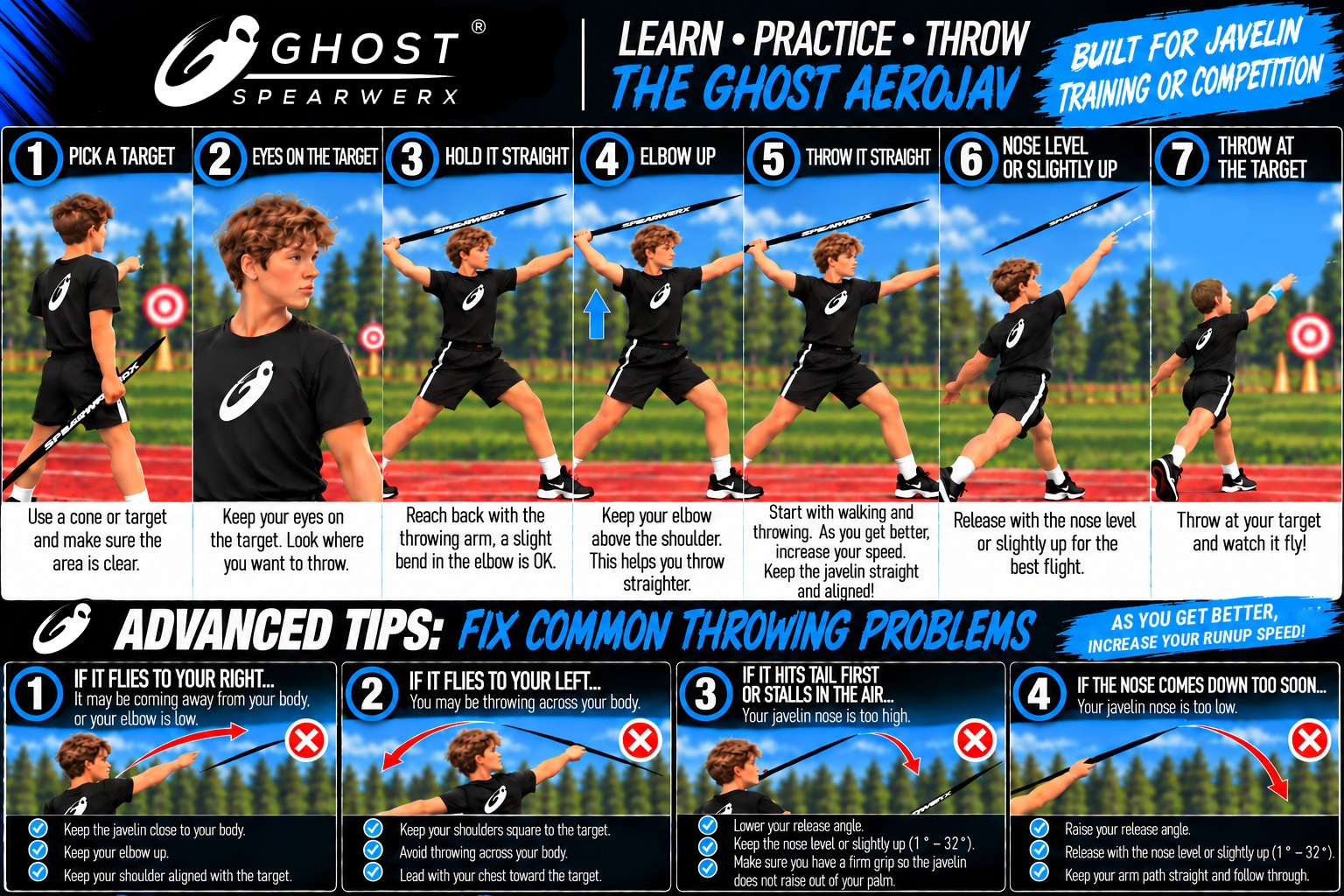
Click the storyboard to read it at full resolution.
AeroJav Throwing Fundamentals & Coaching Tips
Learning how to throw an AeroJav starts with accurate, repeatable movement rather than throwing as hard as possible. Use the Phantom and Ghost illustrated guides above as a visual reference, then reinforce each skill with short, controlled practice sessions. These fundamentals are useful for young athletes, parents introducing the sport, and coaches teaching introductory javelin technique.
1. Choose a target and establish a safe throwing area
Before every throw, select a visible target in an open, designated throwing zone. Keep spectators behind the thrower and ensure the landing area is clear. Aim toward your target, not simply for distance. A consistent direction gives young throwers an easy way to assess improvement and build confidence.
2. Keep the AeroJav aligned during the approach
Hold the AeroJav approximately in line with the direction you intend to throw. Keep your eyes toward the target and your throwing arm comfortably extended back as you prepare. Start with standing throws or a slow walk into the delivery. As coordination improves, gradually increase approach speed without allowing the implement to swing across your body.
3. Maintain a high throwing elbow and release forward
During the delivery, keep the throwing elbow above shoulder level, with the arm moving forward along the intended line of flight. The goal is a smooth, coordinated throw rather than forcing the arm through the motion. Release with the nose level or slightly upward, then allow a natural follow-through toward the target. Avoid exaggerating the upward angle, which can cause the AeroJav to stall.
4. Practice with the Phantom 250g
The Phantom 250g guide breaks the movement into seven memorable steps for beginning throwers. Practice one cue at a time: look at the target, hold the implement straight, or keep the elbow up. A few well-executed throws with a clear objective can be more productive than many rushed attempts. Emphasize safe routines and consistency before adding speed.
5. Progress with the Ghost 450g
The Ghost 450g guide follows the same core technique and adds common flight corrections. If throws drift right or left, inspect alignment and whether the arm crosses the body. If the tail drops or the AeroJav stalls, check for an excessively high nose angle. If the nose dives early, review the release direction and whether the tip is pointed downward. Make one adjustment at a time, then observe the next few throws.
Simple coaching progression
Begin with a stationary target drill, advance to one or two walking steps, and only then add a faster approach. Have athletes describe the single cue they are working on before throwing. Review where the AeroJav travels and how it lands; use those observations to choose the next correction. Keep each practice focused on repeatable technique, proper supervision, and gradual progress.